
Why Your Car Battery Dies in Winter: Complete Mississauga Guide
It’s 7 AM on a frigid January morning in Mississauga. You’re already running late for work. You turn the key in your ignition and hear that dreaded sound: a slow, labored crank followed by… nothing. Your car battery is dead. You’re not alone—winter is the peak season for dead car batteries, and Mississauga’s cold temperatures create the perfect storm for battery failure.
At Mississauga Towing, we respond to hundreds of dead battery calls every winter across Port Credit, City Centre, Cooksville, and beyond. The good news? Most winter battery failures are preventable with the right knowledge and preparation. This guide explains exactly why car batteries die in cold weather, how to recognize the warning signs before you’re stranded, and what to do when you need help fast.
The Science: Why Cold Weather Kills Car Batteries
Car batteries don’t just feel sluggish in winter—they actually lose a massive amount of power when temperatures drop. Understanding the science behind this helps you protect your vehicle before it’s too late.
Chemical Reactions Slow Down in the Cold
Your car battery generates electrical power through chemical reactions between lead plates and sulfuric acid. When temperatures plummet, these chemical reactions slow down dramatically. At 0°C (32°F), a typical car battery loses approximately 35% of its strength. At -18°C (0°F)—temperatures Mississauga regularly sees in January and February—that loss jumps to 60% or more.
This means a battery that works perfectly in summer may only deliver 40% of its normal power on a cold winter morning. If your battery was already weakening due to age or wear, that 40% capacity simply isn’t enough to start your engine.
Your Engine Needs More Power to Start
While your battery is losing power, your engine is simultaneously demanding more of it. Cold temperatures thicken engine oil, transforming it from a free-flowing liquid into something closer to molasses. Your starter motor must work much harder to turn over a cold engine with thick oil, requiring up to twice as much electrical current as it would on a warm day.
This creates a perfect storm: your battery has less power available, but your engine needs more power to start. It’s no wonder so many Mississauga drivers find themselves calling for emergency battery boost service on the coldest mornings.
Power-Hungry Winter Features Drain Your Battery Faster
Think about everything you use on a winter morning: heated seats, rear window defrost, heated mirrors, windshield wipers, headlights (because it’s still dark at 7 AM), and your cabin heater running at full blast. Each of these features draws power from your battery, creating additional strain when your battery is already operating at reduced capacity.
If you’re taking short trips around Mississauga—say, from your home in Meadowvale to the Erin Mills Town Centre and back—your alternator doesn’t have enough running time to fully recharge your battery between starts. Over days and weeks, this gradual drain weakens your battery until one morning, it simply can’t deliver enough power to crank your engine.
Battery Age Matters More in Winter
A battery that’s 3-5 years old might start your car reliably all summer, masking the fact that it’s gradually losing capacity. Winter exposes this weakness immediately. Cold weather is essentially a stress test for your battery—and older batteries fail this test regularly.
If your battery is approaching the 4-year mark and you haven’t had it tested recently, winter is when you’ll discover whether it can still handle the job. Most drivers find out the hard way, stranded in a parking lot at Square One or unable to start their car in their driveway in Streetsville.
Warning Signs Your Battery Is About to Die
Most battery failures don’t happen without warning. Your vehicle will often give you advance notice that your battery is struggling. Watch for these telltale signs, especially as temperatures drop:
Slow Engine Cranking
When you turn your key or push your start button, your engine should turn over quickly with a confident, rapid “ruh-ruh-ruh-ruh” sound. If instead you hear a slow, labored “ruuuuuh… ruuuuuh… ruuuuuh” that takes several seconds before the engine finally catches, your battery is struggling to deliver adequate power. This is the single most common early warning sign of battery failure.
Don’t ignore slow cranking, especially in cold weather. What starts as a 3-second delay can quickly turn into complete failure within days as temperatures continue to drop.
Dimming or Flickering Lights
Turn on your headlights while your engine is off (not running). If they appear noticeably dim, or if your interior dome light flickers when you open the door, your battery voltage is low. You can also check this while idling: if your headlights brighten significantly when you rev the engine, it’s a sign your battery isn’t holding a sufficient charge and is relying heavily on the alternator.
Dashboard Battery Warning Light
Modern vehicles have sophisticated monitoring systems. If your dashboard displays a battery warning light (usually shaped like a battery with + and – symbols), your vehicle’s computer has detected a charging system problem. This could indicate a failing battery, a malfunctioning alternator, or corroded connections. Don’t ignore this warning—have your battery and charging system tested immediately.
Electrical Issues and Glitches
Weak batteries can cause strange electrical behavior: power windows that move slowly, radio settings that reset, warning lights that appear intermittently, or accessories that don’t work properly. These glitches occur because your battery can’t maintain stable voltage across all your vehicle’s electrical systems.
Corrosion on Battery Terminals
Pop your hood and visually inspect your battery terminals. If you see white, blue, or greenish crusty buildup around the metal terminals, that’s corrosion—and it impedes electrical flow. Corrosion is often caused by battery acid leakage, which indicates your battery is deteriorating. While cleaning corrosion can temporarily improve performance, a heavily corroded battery is usually nearing the end of its lifespan.
Age of Your Battery
Check the manufacturing date stamped on your battery case (usually a code indicating month and year). If your battery is 4-5 years old or older, consider it a candidate for replacement before winter hits full force. Even if it’s working now, the extreme cold of a Mississauga January could push it over the edge.
What to Do When Your Battery Dies
You’ve turned the key, heard the dreaded click or silence, and confirmed your battery is dead. Here’s your step-by-step action plan:
Option 1: Jump Start with Cables (If You Have Help)
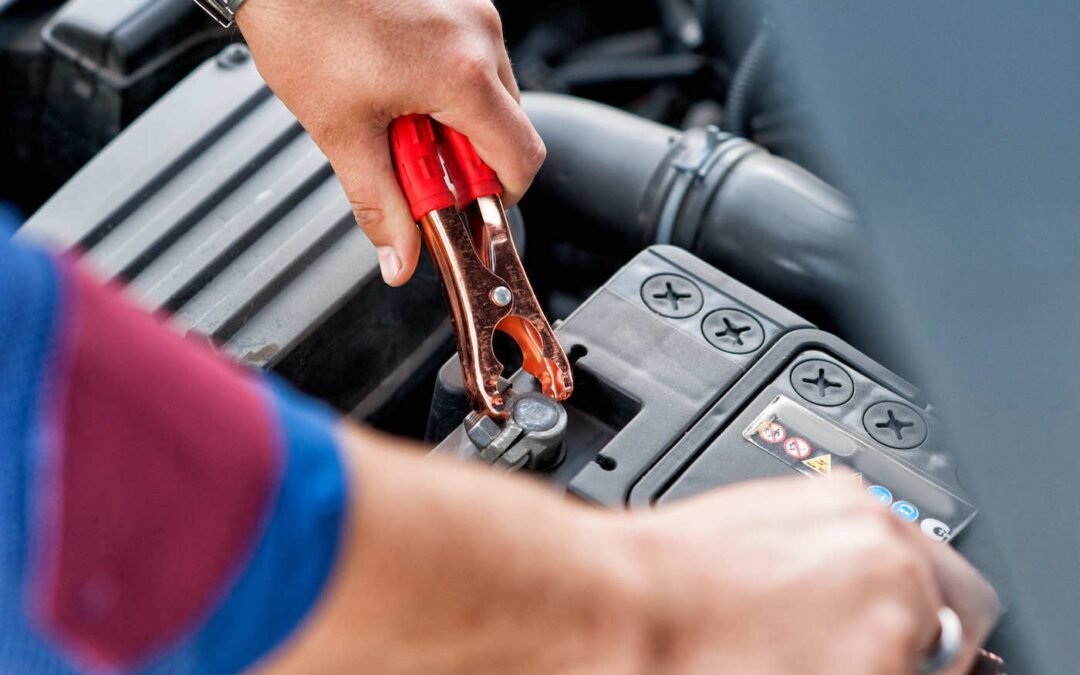
If you have jumper cables and access to another vehicle with a good battery, you can attempt a jump start. Follow these steps carefully to avoid damage or injury:
- Position the vehicles: Park the working vehicle close enough that jumper cables can reach both batteries, but make sure the vehicles aren’t touching.
- Turn off both vehicles and all accessories (lights, radio, climate control).
- Identify the terminals: Red = Positive (+), Black = Negative (−).
- Connect in the correct order:
- Red clamp to the DEAD battery’s positive (+) terminal
- Red clamp to the GOOD battery’s positive (+) terminal
- Black clamp to the GOOD battery’s negative (−) terminal
- Black clamp to an unpainted metal surface on the DEAD car’s engine block (NOT the negative battery terminal—this prevents sparks near the battery)
- Start the working vehicle and let it run for 2-3 minutes to charge the dead battery.
- Attempt to start the dead vehicle. If it doesn’t start after 3-4 attempts, stop and call for professional help.
- Disconnect in reverse order: Black from engine block, black from good battery, red from good battery, red from dead battery.
- Keep the vehicle running for at least 15-20 minutes to recharge the battery, or better yet, drive it for 20-30 minutes on highways or main roads (not short stop-and-go trips).
Important Safety Note: Car batteries contain sulfuric acid and can produce explosive hydrogen gas. Never smoke near a battery, and always connect cables in the proper order to prevent sparks. If you’re uncomfortable with this process, don’t risk it—call a professional.
Option 2: Portable Jump Starter (The Modern Solution)
Portable lithium-ion jump starters are compact, affordable devices that every Mississauga driver should keep in their vehicle during winter. These pocket-sized powerhouses can jump-start your car without needing another vehicle. Simply connect the clamps to your battery, press the power button, and start your engine. Keep one charged in your glove box—it’s like having roadside assistance in your pocket.
Option 3: Call Professional Battery Boost Service
If you don’t have cables, a jump starter, or another vehicle to help, or if you’re in an unsafe location (busy highway, underground parking garage, extreme weather), the safest and fastest solution is to call Mississauga Towing for professional battery boost service.
Our 24/7 emergency dispatch sends a fully equipped tow truck to your location anywhere in Mississauga—whether you’re stuck in a parking lot at Square One, in your driveway in Lorne Park, or on the side of Hurontario Street. We arrive with professional-grade equipment, safely boost your battery, and if needed, can provide towing to a nearby mechanic or your home.
Call anytime, day or night: 647-601-6377
Boost vs. Replace: How to Know What Your Battery Needs
Just because your battery died once doesn’t automatically mean you need a replacement. Here’s how to decide:
When a Boost Is Enough
A battery boost can solve the problem if:
- You left lights, radio, or accessories on: Accidental drain is a one-time issue that doesn’t indicate battery failure.
- Your battery is less than 3 years old: Newer batteries can recover from cold-weather weakness.
- It’s an unusually cold night: A sudden temperature drop to -20°C can temporarily weaken even healthy batteries.
- You haven’t driven in several days: Batteries naturally lose charge when vehicles sit unused, especially in cold weather.
- The vehicle starts immediately after a boost and runs normally: This suggests the battery just needed a temporary power assist.
When You Need a Replacement
It’s time for a new battery if:
- Your battery is 4-5 years old or older: Even if it’s working, it’s living on borrowed time.
- You’ve needed multiple boosts within a week: Repeated failures indicate the battery can’t hold a charge.
- The battery won’t hold a charge after a boost: If the vehicle dies again within hours or a day, the battery has failed internally.
- You hear clicking but the engine doesn’t crank: This is a classic sign of a dead or dying battery that can’t deliver sufficient amperage.
- Corrosion is severe or the battery case is swollen: Physical damage indicates internal failure.
- A battery test shows low voltage or failed cells: Most auto parts stores and mechanics offer free battery testing.
If you’re unsure, our drivers can test your battery voltage on-site when providing boost service. We’ll give you an honest assessment and recommendations—no pressure, no upselling.
How to Prevent Winter Battery Failure
Prevention is always better (and cheaper) than emergency roadside service. Follow these proven strategies to keep your battery strong all winter:
1. Test Your Battery Before Winter Arrives
Don’t wait for the first cold snap to discover your battery is weak. In October or early November, before temperatures drop, have your battery professionally tested. Most auto parts stores, service stations, and mechanics offer free battery testing that measures voltage, cranking amps, and overall health. If your battery tests marginal or weak, replace it proactively rather than gambling on winter survival.
2. Clean Battery Terminals and Connections
Corrosion on your battery terminals creates resistance that reduces electrical flow. Clean terminals using a wire brush, baking soda mixed with water, and a rag. Make sure connections are tight—loose cables can cause poor electrical contact and starting problems. This simple 10-minute maintenance task can extend your battery’s life and prevent winter failures.
3. Park in a Garage or Sheltered Area
Parking your vehicle in a garage overnight protects your battery from extreme temperature fluctuations. Even an unheated garage is typically 5-10°C warmer than the outdoor temperature, which significantly improves battery performance. If you don’t have a garage, parking in a carport or against a building provides some temperature protection compared to open parking lots.
4. Avoid Short Trips When Possible
Each time you start your engine, your battery expends a significant amount of energy. Your alternator then recharges the battery while the engine runs—but it needs at least 15-20 minutes of continuous driving to fully recharge. If you only take short 5-10 minute trips around Mississauga, your battery never fully recovers, leading to gradual discharge over time.
When possible, combine errands into longer trips, or take occasional longer drives on highways to give your alternator time to fully recharge your battery.
5. Limit Use of Accessories Before Starting
On cold mornings, resist the temptation to turn on your heated seats, heater, defroster, and radio before starting your engine. These accessories draw power from an already cold-weakened battery. Instead, start your engine first (using only the starter motor), then once the engine is running and the alternator is generating power, turn on your accessories. This small habit change can make the difference between a successful start and a dead battery.
6. Keep Your Battery Charged During Long Storage
If you’re storing a vehicle for weeks or months during winter (classic car, RV, motorcycle), either disconnect the battery cables to prevent parasitic drain from vehicle computers, or connect a battery maintainer (trickle charger) that keeps the battery at optimal charge levels without overcharging. A fully charged battery is much less likely to freeze and fail during storage.
7. Check Your Alternator Health
Your battery relies on your alternator to recharge after starting. If your alternator is failing or weak, your battery will gradually drain even with regular driving. Warning signs of alternator problems include dimming lights while driving, a battery warning light on the dashboard, or needing frequent battery boosts even with a new battery. Have your alternator tested if you suspect issues.
8. Replace Your Battery Proactively
Don’t wait until you’re stranded. If your battery is 4-5 years old, consider replacing it in the fall before winter stress causes failure. Look for a battery with a high Cold Cranking Amps (CCA) rating—this measures the battery’s ability to start an engine in cold temperatures. For Mississauga winters, choose a battery with a CCA rating appropriate for temperatures below -20°C.
Understanding Cold Cranking Amps (CCA)
When shopping for a replacement battery, you’ll see a specification called Cold Cranking Amps (CCA). This number is critical for winter performance in Mississauga’s climate.
CCA measures how much current (in amps) a battery can deliver at -18°C for 30 seconds while maintaining at least 7.2 volts. The higher the CCA rating, the better the battery performs in cold weather. For example:
- 400-500 CCA: Minimum for small cars in moderate climates
- 600-700 CCA: Good for mid-size vehicles in cold Canadian winters
- 800+ CCA: Ideal for larger vehicles, diesel engines, or extreme cold climates
Always choose a battery that meets or exceeds your vehicle manufacturer’s recommended CCA rating. In Mississauga’s winter conditions, opting for a higher CCA rating provides extra insurance against cold-weather starting problems.
Common Mistakes That Make Battery Problems Worse
When facing a dead battery, avoid these common errors that can cause additional problems:
- Repeatedly trying to start a dead battery: If your engine doesn’t start after 3-4 attempts, stop. Continued cranking can damage your starter motor and further drain your battery. Call for professional help instead.
- Connecting jumper cables in the wrong order: This can cause sparks, battery damage, or even battery explosion. Always follow the proper sequence and never connect negative directly to the dead battery’s negative terminal.
- Ignoring underlying problems: If you need frequent boosts, don’t just keep jumping your battery. Investigate the root cause—aging battery, failing alternator, parasitic drain, or corroded connections—and fix the problem permanently.
- Using accessories immediately after a boost: After jump-starting your vehicle, drive for at least 20-30 minutes before turning on high-draw accessories like heated seats or the defroster. Give your alternator time to recharge your battery first.
- Buying the cheapest battery: Not all batteries are equal. Cheap, low-quality batteries often fail prematurely, especially in extreme temperatures. Invest in a reputable brand with a strong warranty and appropriate CCA rating for Canadian winters.
What If Your Battery Dies While Driving?
If your battery warning light comes on while driving, or if your vehicle suddenly loses electrical power (lights dimming, accessories failing), you’re likely experiencing alternator failure rather than just a dead battery. Here’s what to do:
- Turn off all non-essential accessories immediately (radio, heated seats, air conditioning) to conserve remaining battery power.
- Continue driving carefully to a safe location—a parking lot, service station, or home—if possible. Your vehicle may run for a few minutes on battery power alone before the engine dies.
- Pull over safely if the engine stalls or power steering fails. Turn on your hazard lights and call for roadside assistance immediately.
- Do not attempt to restart repeatedly. If your alternator has failed, your battery won’t recharge, and you’ll quickly drain it completely trying to restart.
This situation requires professional diagnosis and likely a tow to a mechanic to replace your alternator and possibly recharge or replace your battery.
Battery Boost Service Across All of Mississauga
Mississauga Towing provides fast, professional battery boost service 24 hours a day, 7 days a week, across all neighborhoods:
- Port Credit: Lakeshore Road, marina parking lots, and waterfront residential areas
- City Centre: Square One parking structures, condo underground garages, and downtown streets
- Cooksville: Hurontario corridor, Cooksville GO Station, and high-rise parking areas
- Erin Mills: Erin Mills Town Centre, residential subdivisions, and parkway routes
- Meadowvale: Meadowvale Town Centre, business parks, and neighborhood streets
- Streetsville: Queen Street, residential areas, and shopping districts
- Clarkson: Clarkson GO Station, Lakeshore communities, and Southdown Road area
- Lorne Park: Residential driveways, Lorne Park Road, and neighborhood access points
No matter where you’re located in Mississauga, we dispatch the nearest available truck to your location with an average arrival time of 20-45 minutes (depending on weather and traffic conditions). We provide real-time ETA updates via text so you always know when help is arriving.
Frequently Asked Questions (FAQs)
How much does battery boost service cost in Mississauga?
Professional battery boost service typically costs between $80 and $150 depending on your location, time of day, and service complexity. We provide upfront, transparent pricing when you call—no hidden fees or surprises. Call 647-601-6377 for an exact quote based on your specific situation.
Can I jump-start a completely dead battery?
Yes, in most cases. A completely discharged battery can usually be jump-started if the battery itself hasn’t failed internally. However, if the battery has frozen (which can happen if it was deeply discharged in extreme cold) or if internal cells have failed, jump-starting won’t work. In these cases, battery replacement is necessary.
How long should I drive after a jump start?
Drive for at least 20-30 minutes on highways or main roads to allow your alternator to recharge your battery. Avoid short stop-and-go trips immediately after a boost. For best results, drive continuously without stopping, and avoid using high-draw accessories like heated seats or the heater until your battery has had time to recharge significantly.
Why does my battery keep dying even after jump-starts?
Repeated battery failures indicate an underlying problem: your battery may have reached the end of its lifespan (typically 4-5 years), your alternator may not be charging properly, you may have a parasitic drain from an electrical component that stays on when the car is off, or your battery connections may be corroded. Professional diagnosis is needed to identify and fix the root cause. We can test your battery on-site and provide recommendations.
Can cold weather permanently damage my battery?
Yes. If a battery is deeply discharged in extreme cold, the electrolyte inside can freeze, causing permanent internal damage and swelling of the battery case. A fully charged battery can withstand temperatures well below -40°C without freezing, but a discharged or weak battery can freeze at temperatures as warm as -5°C. This is why keeping your battery charged and healthy is critical during winter.
Should I disconnect my battery if my car sits unused in winter?
Yes, if you’re storing a vehicle for more than two weeks during winter, disconnecting the negative battery cable prevents parasitic drain from vehicle computers and electronics. Alternatively, use a battery maintainer (trickle charger) to keep the battery at optimal charge levels during storage. A fully charged battery is much less likely to freeze or fail during extended periods of inactivity.
What’s the difference between battery boost and battery replacement?
Battery boost (jump-start) provides temporary external power to start your vehicle when your battery is discharged or weak. It doesn’t fix a failing battery—it just gets your engine running so the alternator can recharge it. Battery replacement installs a new battery when your old one has failed or is too weak to hold a charge. If your battery is more than 4 years old or repeatedly dies, replacement is the permanent solution.
Can extreme cold kill a brand-new battery?
Unlikely, but possible. A brand-new, fully charged battery should handle extreme cold without problems. However, if a new battery was deeply discharged (from leaving lights on, for example) and then exposed to severe cold, it can be damaged. Additionally, if a new battery was defective or improperly stored before installation, cold weather can reveal these weaknesses. Most quality batteries come with warranties that cover premature failure.
Is it safe to boost a battery in freezing rain or snow?
Yes, but take extra precautions. Make sure your hands and the jumper cable clamps are dry to prevent electrical shock. Avoid standing in puddles or on wet ground. If conditions are extremely hazardous (heavy freezing rain, poor visibility, icy ground), it’s safer to call professional battery boost service rather than attempting a DIY jump in dangerous conditions.
Don’t Let a Dead Battery Ruin Your Day
Winter battery failures are frustrating, but they’re rarely a surprise if you know what to watch for. By understanding why batteries fail in cold weather, recognizing the early warning signs, and taking proactive maintenance steps, you can minimize your risk of being stranded on a cold Mississauga morning.
But when prevention isn’t enough and you find yourself with a dead battery, Mississauga Towing is ready to help 24/7. Our professional battery boost service gets you back on the road quickly and safely, whether you’re stuck at home, at work, or anywhere in between. We also offer complete roadside assistance including tire changes, fuel delivery, lockout service, and emergency towing.
Dead Battery? We’re Just One Call Away.
24/7 professional battery boost service across all of Mississauga. Fast response. Transparent pricing. Friendly, experienced drivers.
Available 24 hours a day, 7 days a week, including holidays. We accept all major credit cards and can bill your insurance directly if your policy includes roadside assistance coverage.
Stay warm, drive safe, and know that help is always just a phone call away when winter tests your battery’s limits.