Stuck in Snow? Complete Winter Recovery Guide for Mississauga Drivers
Winter in Mississauga brings beautiful snowfall—but it also brings one of the most frustrating situations any driver can face: getting stuck in snow. Whether you’ve slid into a ditch off Hurontario Street, buried your tires in a snow-covered parking lot near Square One, or lost traction on an icy Lakeshore Road, knowing what to do next can save you hours of stress and potentially prevent vehicle damage.
At Mississauga Towing, we’ve recovered hundreds of vehicles from snow and ice across the Greater Toronto Area each winter. This complete guide covers everything from DIY recovery techniques to when you need professional winch out service—plus essential winter preparation tips to help you avoid getting stuck in the first place.
Why Cars Get Stuck in Snow: Understanding Winter Traction Loss
Snow and ice create a low-friction surface that your tires simply can’t grip. When your drive wheels spin without forward movement, you’re stuck. This happens most commonly in several scenarios across Mississauga:
- Parking Lot Snow Accumulation: Fresh snow builds up overnight in mall parking lots, driveways, and side streets, creating hidden pockets that trap vehicles.
- Black Ice on Roads: Invisible ice patches on bridges, overpasses, and shaded areas cause sudden loss of traction, sending vehicles into ditches or snowbanks.
- Unplowed Side Streets: Residential areas in neighborhoods like Meadowvale, Streetsville, and Erin Mills often see delayed plowing, leaving deep snow that high-centers vehicles.
- Freezing Rain Conditions: When temperatures hover around 0°C, freezing rain creates a slick ice layer that’s nearly impossible to drive on without winter tires.
The physics are simple: your engine generates power, but if your tires can’t transfer that power to the ground through friction, you go nowhere—except deeper into the snow as your spinning tires melt and refreeze the surface beneath them.
Immediate Steps When You’re Stuck in Snow
The moment you realize you’re stuck, your first actions determine whether you’ll free yourself quickly or need professional help. Follow these steps in order:
1. Stop Spinning Your Tires
The instant you feel your wheels spinning without forward movement, take your foot off the gas. Continuing to spin your tires will only:
- Dig you deeper into the snow
- Melt the snow under your tires, creating slippery ice
- Potentially damage your transmission or drivetrain
- Waste fuel and generate heat that makes recovery harder
2. Assess Your Situation Safely
Put your vehicle in park, engage your parking brake, and turn on your hazard lights. Before getting out, check your surroundings:
- Are you blocking traffic on a busy road like Burnhamthorpe or Dundas Street?
- Is your vehicle stable, or are you at risk of sliding further?
- What’s the weather doing—is visibility poor, or is more snow falling?
- Do you have a clear, safe path to exit your vehicle?
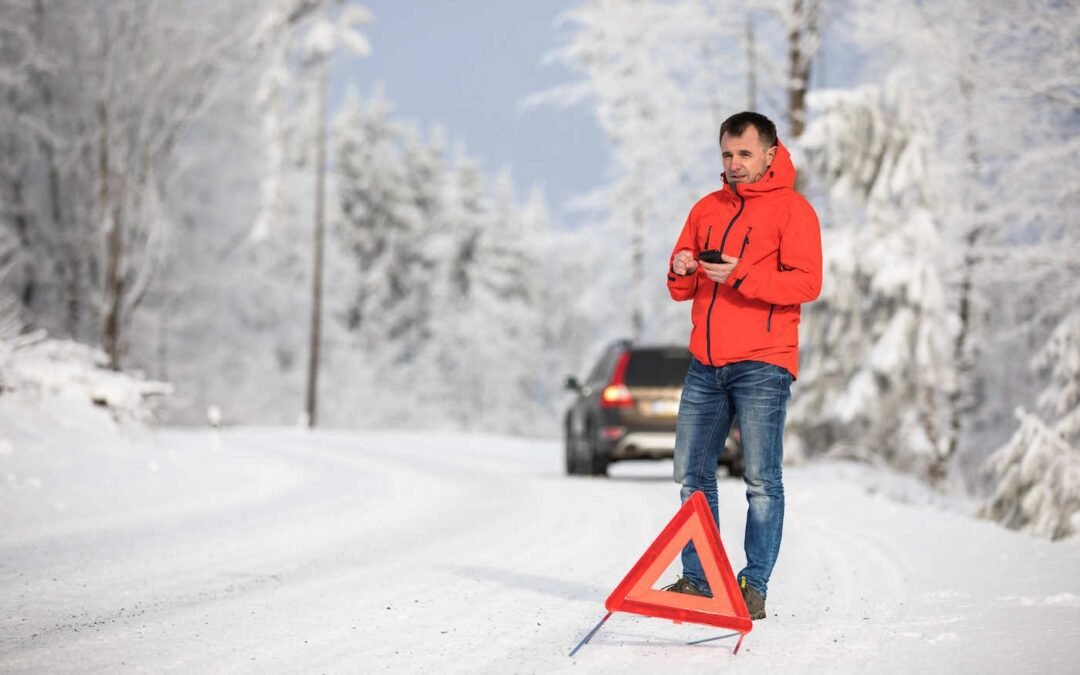
If you’re stuck on a major highway like the 401, 403, or QEW, stay inside your vehicle with your seatbelt on and call for professional 24/7 emergency towing immediately at 647-601-6377. Do not attempt to exit onto a highway shoulder in poor visibility.
3. Clear Snow from Around Your Vehicle
If it’s safe to exit, grab a shovel (if you have one in your winter emergency kit—more on that below) and start clearing:
- Around all four tires: Dig out snow in front, behind, and underneath each tire, creating a clear path at least 2-3 feet in length.
- Under the vehicle: Check for snow packed under your car’s undercarriage. If you’re “high-centered” (the belly of your car is resting on snow), you’ll need to clear this before you can move.
- The exhaust pipe: Make absolutely certain your exhaust pipe is clear of snow. A blocked exhaust can force deadly carbon monoxide back into your cabin if you’re running the engine.
4. Check Your Wheels and Straighten Your Steering
Turned wheels create additional resistance. Straighten your steering wheel to point your tires directly forward (or backward, if you’re backing out). This gives your tires the best chance to find traction.
DIY Techniques to Get Unstuck from Snow
Once you’ve assessed the situation and cleared snow, try these proven techniques—but remember, if your vehicle doesn’t budge after 3-4 attempts, it’s time to call professional help to avoid damage.
The Rocking Method
This technique uses momentum to “rock” your vehicle out of the snow:
- Shift into the lowest gear (Drive or 1st gear for automatics; 2nd gear for manuals).
- Gently accelerate forward until your wheels start to slip, then immediately stop.
- Shift into reverse and gently accelerate backward to the same point.
- Repeat this back-and-forth motion, building momentum each time.
- When you feel traction, commit to one direction and drive out smoothly without stopping.
Warning: Rapid shifting between forward and reverse can overheat and damage your transmission. Limit this to 5-6 attempts maximum. If it’s not working, stop and try a different method or call 647-601-6377 for roadside assistance.
Adding Traction with Materials
If your tires are spinning on ice or packed snow, they need something to grip. Place traction-enhancing materials directly under and slightly in front of your drive wheels:
- Sand or kitty litter: Pour a generous amount under the tire. The grains provide texture for your tire to bite into.
- Floor mats: Wedge your rubber or carpet floor mats under the drive wheels. The textured surface can provide just enough grip. (You may sacrifice the mats, but they’re cheaper than a tow or transmission repair.)
- Cardboard or wooden boards: Flatten cardboard boxes or place small boards as a solid surface for your tires to climb onto.
- Road salt or ice melt: If you’re stuck on ice, sprinkle salt or ice melt under your tires. Give it 5-10 minutes to work before attempting to drive.
The Push Method (With Help)
If you have passengers or Good Samaritans nearby, a coordinated push can work wonders—but only if done safely:
- Make sure you’re in forward gear only if people are pushing from behind. Never reverse with people nearby.
- Communicate clearly: Count to three, then gently apply gas as pushers shove.
- The driver should apply steady, gentle throttle—not floor it.
- Pushers should stay to the sides of the vehicle, never directly behind the tires, to avoid being hit by snow, slush, or debris.
When DIY Won’t Work
Some situations require professional equipment. Call Mississauga Towing at 647-601-6377 if:
- Your vehicle is stuck in a ditch, on a slope, or against a guardrail.
- You’re high-centered with the undercarriage resting on snow or ice.
- Your wheels are completely buried, and shoveling isn’t making progress.
- You’ve tried the rocking method 5+ times with no movement.
- Ice is forming under your tires from wheel spin.
- You’re on a busy road or highway where it’s unsafe to exit the vehicle.
Professional Winch Out Service: How It Works
When DIY methods fail, professional winch out service is the safe, damage-free solution. Here’s what happens when you call Mississauga Towing for snow recovery:
Step 1: Rapid Dispatch
Our 24/7 dispatch team answers your call and gathers key information: your exact location (GPS coordinates, nearest intersection, or landmark), vehicle type, and situation description. We then send the closest available tow truck equipped with winching equipment—typically arriving within 20-45 minutes depending on weather and your location in Mississauga.
Step 2: Professional Assessment
Our operator assesses the situation: ground conditions, angle of your vehicle, snow depth, and any obstacles. This determines the safest recovery method and anchor point for the winch.
Step 3: Secure Winching
We use heavy-duty motorized winches with steel cables or synthetic rope rated for thousands of pounds of pulling force. The winch cable is attached to a secure point on your vehicle’s frame (never to bumpers or body panels, which can tear off). The tow truck is positioned as an anchor, and the winch slowly, steadily pulls your vehicle out of the snow without jerking or causing damage.
Step 4: Traction and Tow (If Needed)
Once freed, we assess whether your vehicle is drivable. If you’re in a safe location, you’re good to go. If you’re stranded in a dangerous spot, buried too deep, or if your vehicle sustained damage, we can provide flatbed towing to your home, a nearby mechanic, or a safe parking area.
Winch out service is priced based on the complexity of the recovery and your location. Call 647-601-6377 for an upfront, transparent quote with no hidden fees.
Preventing Future Snow Incidents: Winter Preparation Checklist
The best way to handle getting stuck in snow is to avoid it entirely. Follow this proactive winter preparation checklist for Mississauga’s harsh winter conditions:
Install Winter Tires (Mandatory in Spirit, Essential in Fact)
While Ontario doesn’t legally require winter tires, they are absolutely essential for safe winter driving. Winter tires (marked with the Three-Peak Mountain Snowflake symbol) are made from rubber compounds that stay flexible in cold temperatures and feature deeper tread patterns designed to bite into snow and channel away slush.
Install four winter tires—not just two. Mismatched tires create handling imbalances that increase your risk of sliding or getting stuck. Have them installed by early November and keep them on until April.
Build a Winter Emergency Kit
Every vehicle operating in Mississauga during winter should carry:
- Collapsible snow shovel
- Bag of sand, kitty litter, or traction mats
- Jumper cables or portable battery booster (cold kills batteries—more on that in our battery boost service guide)
- Flashlight with extra batteries
- Warm blankets or sleeping bag
- High-visibility vest or reflective triangle
- Ice scraper and snow brush
- First aid kit
- Non-perishable snacks and bottled water
- Fully charged power bank for your phone
Monitor Weather and Road Conditions
Before driving, check Environment Canada weather alerts and road conditions. Avoid unnecessary travel during winter storm warnings, freezing rain, or when visibility is poor. If you must drive, inform someone of your route and expected arrival time.
Maintain Your Vehicle
Cold weather exposes weaknesses in your vehicle. Before winter hits:
- Test your battery (batteries lose 35% capacity at 0°C and 60% at -18°C)—consider replacement if it’s over 3 years old or get a battery boost when needed.
- Check antifreeze levels and ensure the coolant mix is rated for -40°C.
- Switch to winter-grade windshield washer fluid (rated to -40°C).
- Inspect wiper blades and replace if cracked or worn.
- Check tire pressure weekly (tires lose 1 PSI for every 5°C drop in temperature).
- Keep your fuel tank at least half full to prevent fuel line freeze-ups.
Drive for Conditions
- Reduce speed by 25-50% in snow or ice.
- Increase following distance to at least 8-10 seconds.
- Accelerate and brake gently—sudden inputs cause skids.
- Avoid using cruise control in winter conditions.
- If you start to skid, ease off the gas and steer in the direction you want to go (don’t slam the brakes).
Common Mistakes That Make Things Worse
When panic sets in, drivers often make these costly errors:
- Flooring the gas pedal: Aggressive throttle just spins your tires faster, melting snow into ice and digging you deeper.
- Turning the wheels while stuck: Angled tires create more resistance. Straighten your steering before attempting to move.
- Ignoring the “high-centered” problem: If your car’s undercarriage is resting on snow, your tires won’t touch the ground no matter how much you accelerate. You must clear the snow underneath.
- Using summer tires in winter: Summer tires harden in cold temperatures and provide almost no traction on snow or ice.
- Not calling for help soon enough: Waiting hours in the cold, wasting fuel, and risking hypothermia is dangerous. If you’re stuck and can’t free yourself in 15-20 minutes, call 647-601-6377.
What to Do While Waiting for Help
If you’ve called for professional recovery and are waiting for our arrival, follow these safety protocols:
- Stay with your vehicle unless you’re in immediate danger. Your car is visible, insulated, and a shelter from the elements.
- Run the engine for heat sparingly: Run the engine and heater for 10 minutes every hour to conserve fuel. Make sure your exhaust pipe is clear of snow to prevent carbon monoxide poisoning.
- Keep a window slightly cracked for ventilation, even when the heat is on.
- Stay visible: Keep your hazard lights on. Tie a brightly colored cloth to your antenna or door handle if you have one.
- Avoid overexertion: Shoveling snow in extreme cold can lead to exhaustion, sweating (which increases heat loss), and even heart strain. Pace yourself.
- Communicate your location: Text a friend or family member your GPS coordinates and let them know help is on the way.
Winter Towing Across Mississauga’s Toughest Spots
Mississauga’s diverse geography creates unique winter challenges. We provide winch out and recovery services across all neighborhoods, including:
- Port Credit: Lakeshore Road and waterfront areas see lake-effect snow and icy conditions near the marina.
- City Centre: Underground parking garages at Square One and condo complexes create confined recovery situations.
- Cooksville: High-traffic intersections along Hurontario and Dundas freeze quickly and see frequent slide-offs.
- Clarkson: Residential streets and Clarkson GO Station parking lots accumulate unplowed snow.
- Streetsville: Hilly terrain and older roads create slippery slopes and ditch hazards.
No matter where you’re stuck, we know the fastest routes and have the equipment to reach you—even in the worst conditions.
Frequently Asked Questions (FAQs)
How much does winch out service cost in Mississauga?
Winch out service typically ranges from $150 to $400 depending on the complexity of the recovery, your location, and the time of day. Simple snow extractions from parking lots are less expensive than ditch recoveries on highways. Call 647-601-6377 for an exact, upfront quote before we dispatch.
Can I winch out my own car with another vehicle?
We strongly advise against DIY winching or towing with another vehicle unless you have professional recovery gear and training. Improper winching can cause severe damage to both vehicles, snap cables (which become deadly whips), and result in injury. Professional winch out service is always safer and often cheaper than repair costs from a botched DIY attempt.
How long does it take for a tow truck to arrive in winter weather?
During normal winter conditions, Mississauga Towing typically arrives within 20-45 minutes. During major snowstorms or periods of high call volume (like freezing rain events), response times may extend to 60-90 minutes. We provide real-time ETA updates via text so you’re never left guessing.
Will insurance cover winch out service?
Many auto insurance policies include roadside assistance coverage that covers winch outs, jump starts, and towing. Check your policy or call your insurer to confirm. If covered, we can bill your insurance directly. If not, we accept all major payment methods and provide detailed receipts for reimbursement claims.
What’s the difference between winching and towing?
Winching is the process of using a motorized cable system to pull a stuck vehicle out of snow, mud, or a ditch back onto solid ground. Towing is transporting a vehicle from one location to another using a tow truck. Often, we winch a vehicle out first, then tow it if it’s not drivable or if you’re in an unsafe location. Learn more about our full range of services.
Can you recover my car if it’s stuck in my driveway?
Yes. We provide winch out service for vehicles stuck in residential driveways, parking lots, and private property throughout Mississauga. Our operators are trained to work in tight spaces without damaging landscaping, fences, or other vehicles.
Do I need winter tires if I have all-wheel drive (AWD)?
Yes. AWD helps you accelerate in slippery conditions, but it does nothing to help you stop or steer. Winter tires provide the grip you need for braking and cornering on ice and snow. AWD with all-season or summer tires is a false sense of security and a common reason drivers end up stuck or in accidents. For safe winter driving, always use four winter tires regardless of your drivetrain type. If you’re stuck with an AWD vehicle, we use flatbed towing to prevent damage to your drivetrain.
What should I do if my car is stuck on the highway?
Stay inside your vehicle with your seatbelt on, turn on your hazard lights, and call 911 if you’re blocking traffic or in immediate danger. Then call Mississauga Towing at 647-601-6377 for emergency highway recovery. Do not exit your vehicle onto the highway shoulder unless absolutely necessary—many winter accidents involve pedestrians struck by passing vehicles in low visibility.
When Winter Hits Hard, Mississauga Towing Is Ready 24/7
Getting stuck in snow is stressful, but you’re not alone. Mississauga Towing operates around the clock, 365 days a year, with a full fleet of winter-ready heavy-duty tow trucks, flatbeds, and winching equipment. Our local operators know Mississauga’s roads intimately—from the busiest highways to the quietest residential streets—and we’re trained to handle winter recovery safely, quickly, and without damaging your vehicle.
Whether you’re stuck in a snowbank near Lorne Park, buried in a parking lot at Erin Mills Town Centre, or stranded after a collision on the 403, one call is all it takes.
Stuck in Snow? We’re On Our Way.
24/7 emergency winch out and recovery service across Mississauga. Fast response. Transparent pricing. Damage-free recovery.
Available 24 hours a day, 7 days a week, including holidays. All major credit cards accepted. Insurance billing available.
Don’t let winter stop you. Prepare smart, drive safe, and know that help is always just one call away.